Overview
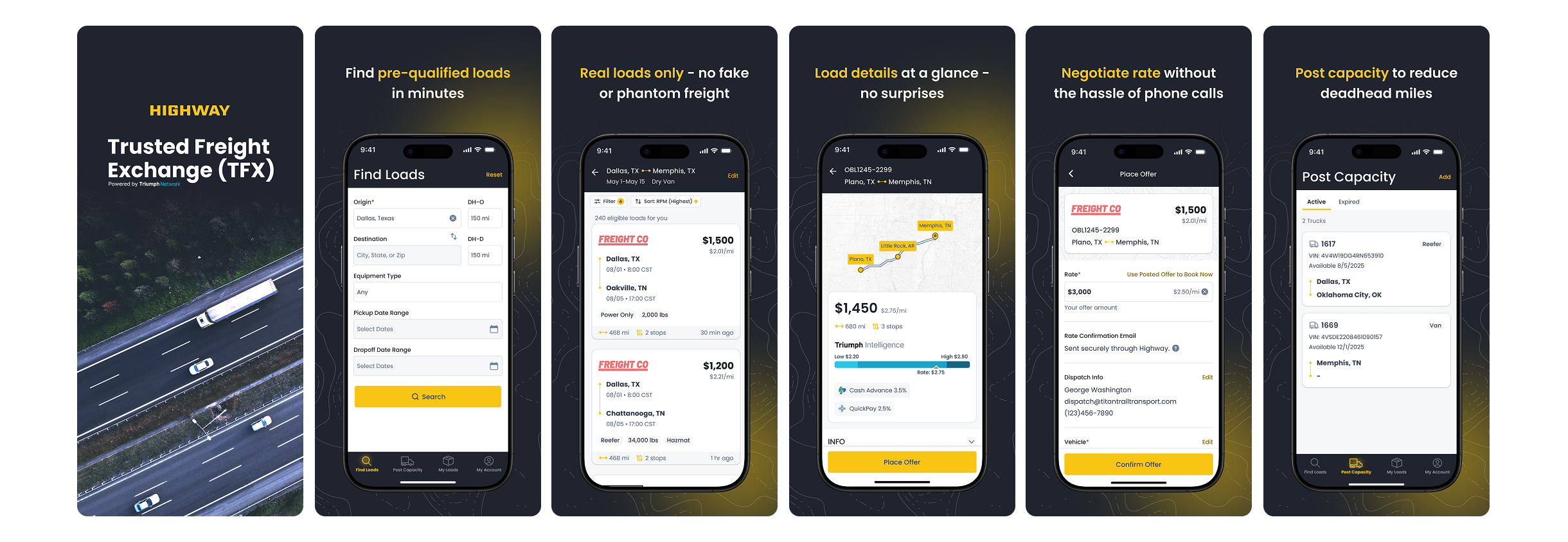
Highway is an identity engine for the freight industry, primarily focusing on verifying the identity of motor carriers (truckers) for freight brokers. This helps combat fraud, which has significantly increased in the industry. Their key product, “Sign in with Highway”, allows carriers to establish a verified digital profile, enabling faster and more secure onboarding with multiple brokers (similar to “Sign in with Google”).
Problem
Highway has been building a Trusted Freight Exchange (TFX) as a web application, serving as a load board where only verified carriers and credit-approved brokers can interact. The goal is to create a high-quality, trusted marketplace, distinguishing itself from existing load boards by focusing on the quality of participants rather than just quantity.
The company has grown rapidly, leading to a need for external partnership to build a mobile app. Highway team had plans to attend a high-visibility industry convention, and having a carrier-focused rather than broker-focused mobile app ready to put into the hands of attendees would generate a lot of positive interest.
Approach
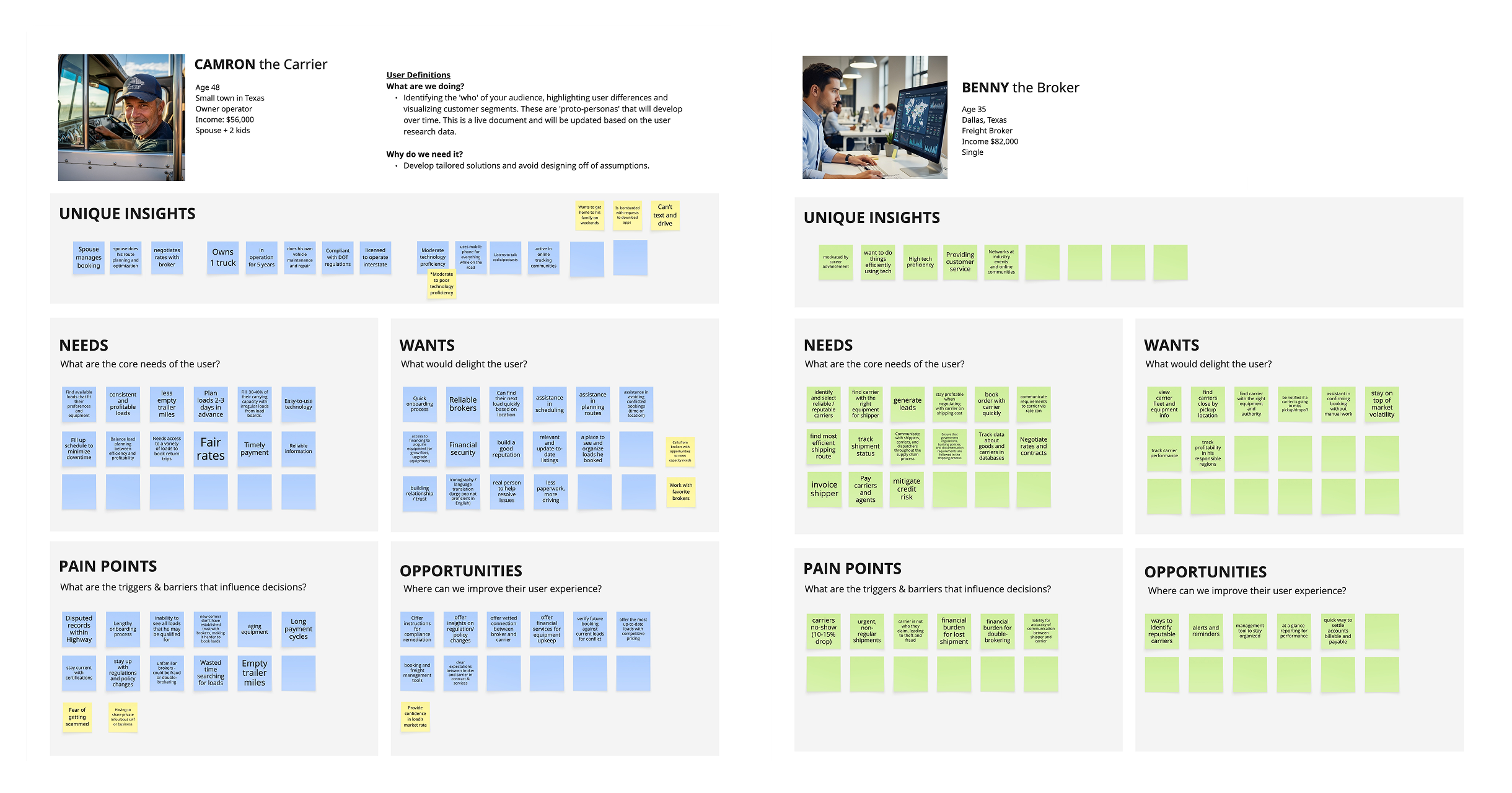
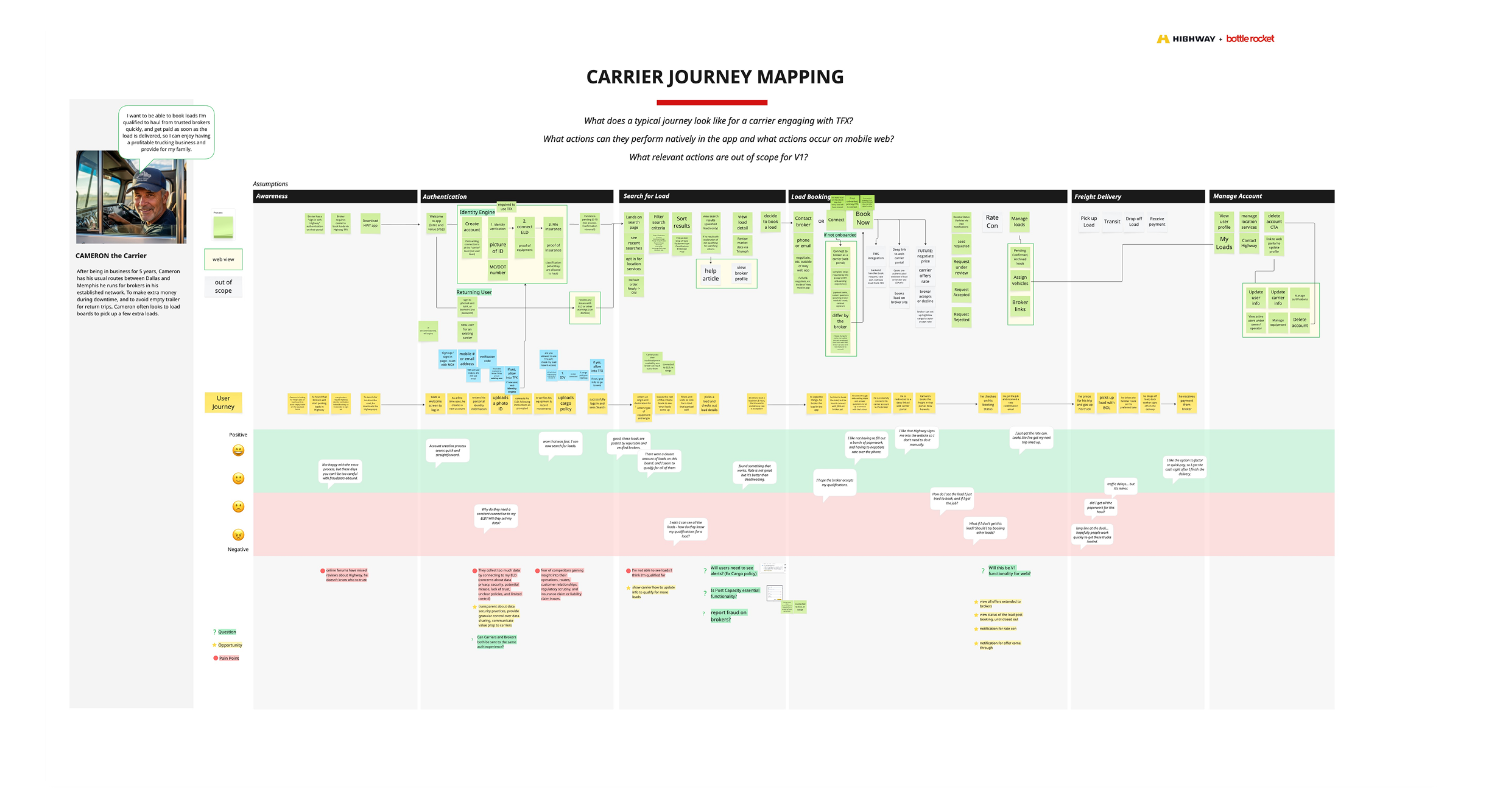
At project kickoff, we conducted a light workshop to align with stakeholders on the Carrier persona, and drafted a journey map to further align on the MVP feature set envisioned by Highway. We also sat down with carriers to understand their pain points, and to learn more about the industry through their eyes.
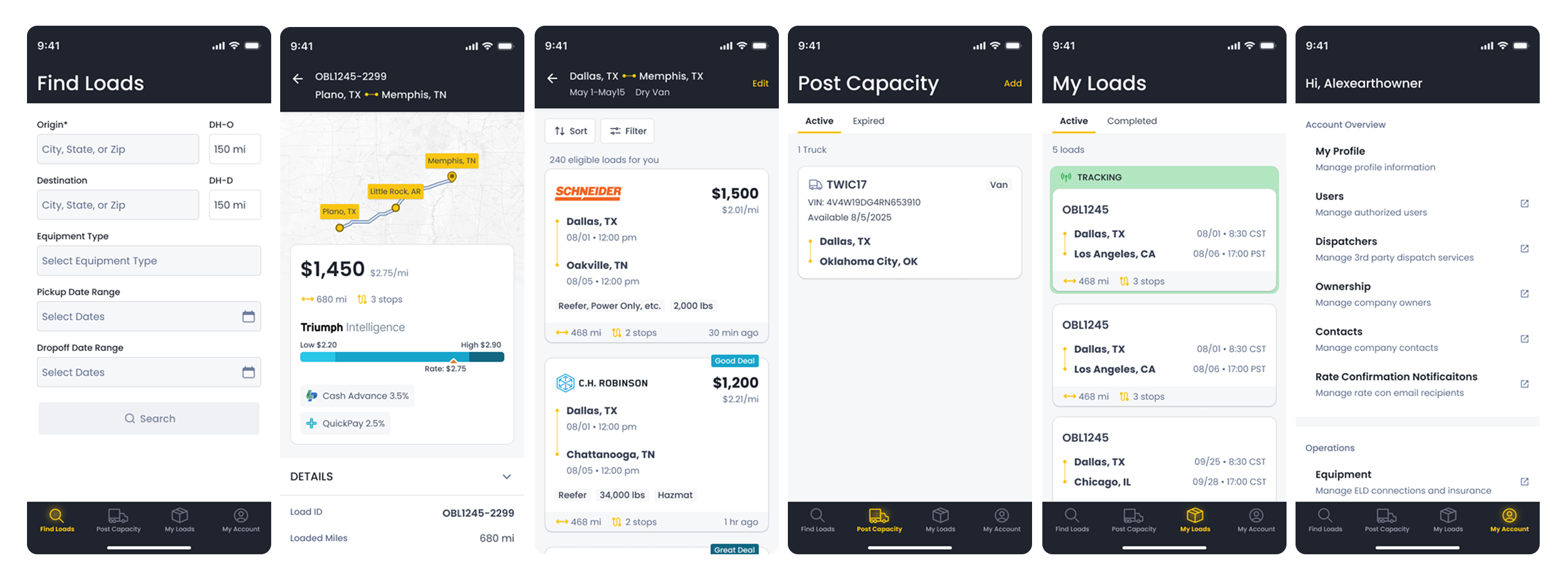
With an established design pattern library led by the web app, and working processes and API endpoints, we tackled one feature/flow per sprint, working closely with client stakeholders, product team, and engineering to create designs using app best practices.
Enforcing a “Trusted” Exchange Without Walling Out New Carriers
It’s a daily battle for carriers to compete for available loads on a load board. Boards like DAT and Truck Stop are like Craigslist, where anyone can transact without a vetted identity, and it puts both the brokers and carriers at risk.
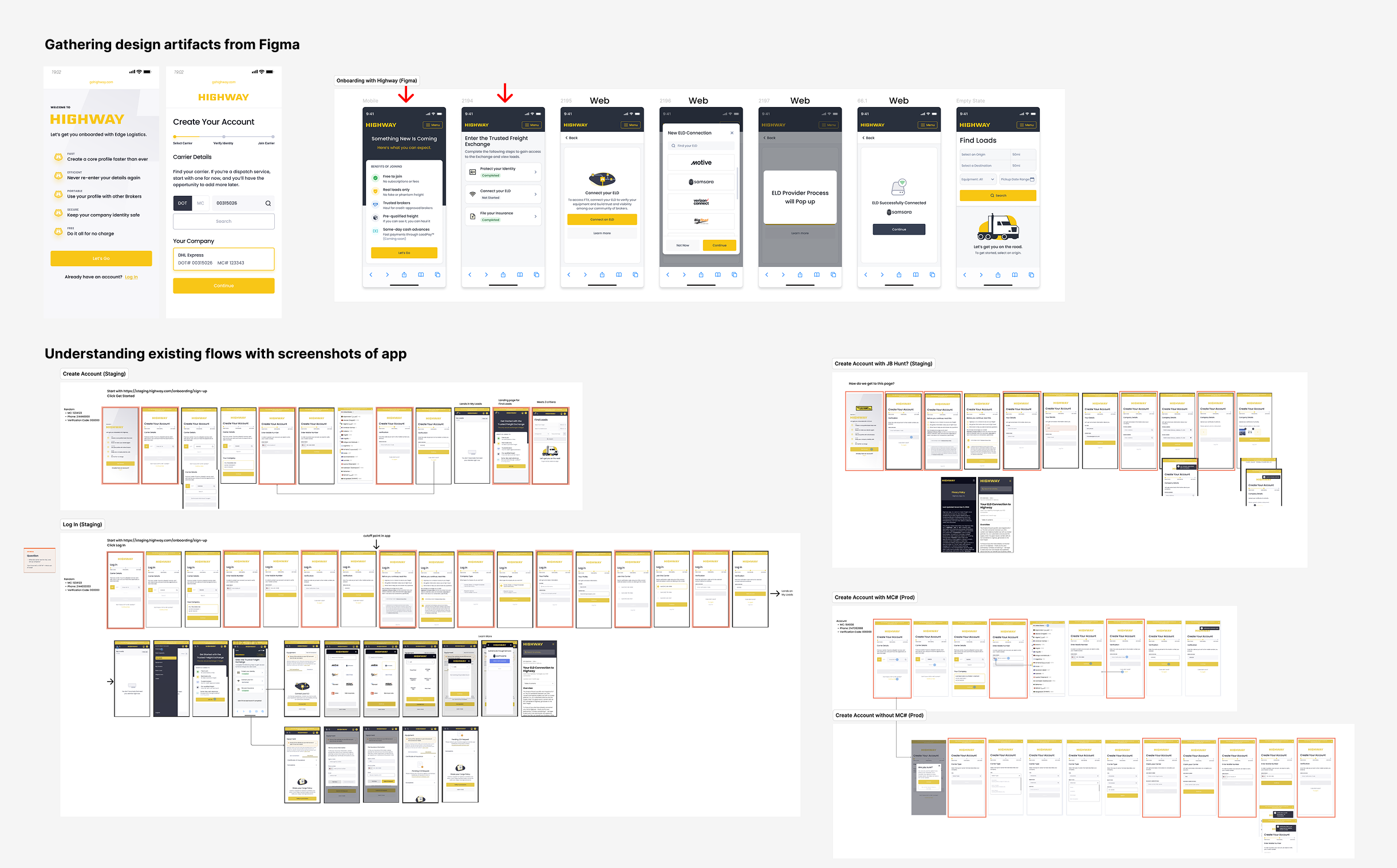
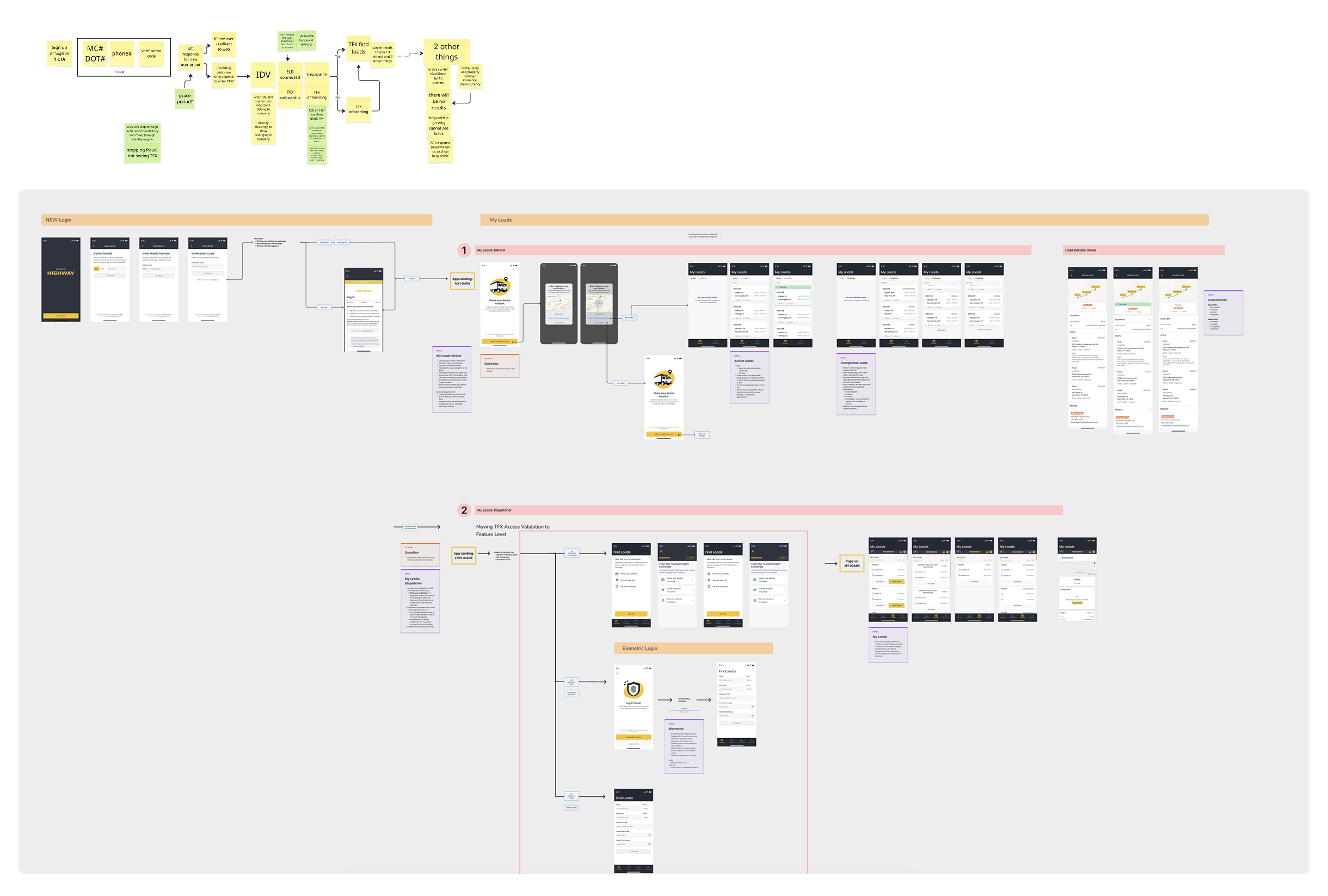
Highway’s Freight Exchange board changes this, requiring an identification vetting process for the carriers to be able to view and bid on loads listed by verified brokers. There are strict criteria carriers need to meet before being given access to the load board, and our challenge was to cover all scenarios during the authentication process to make sure bad actors are gated, but legitimate users are still able to be guided through the process with UI messaging and soft handoff.
Requirements took more than stakeholder conversations. We captured the existing staging flows screen by screen, mapped the proposed screens against the API responses behind them, and worked through the roles — Driver, Dispatcher, and Owner Operator — which differ in what each can see and which permissions each has to grant, like location tracking.
Many iterations later, we settled on native app screens that hand off to the web’s existing verification process, so we never had to rebuild the identity engine from scratch.
Putting Carriers in Control of Booking Loads
In order to compete for the most suitable loads posted for the day, a carrier makes many calls early in the morning to negotiate a deal with brokers who post loads on a load board. Once a carrier’s bid for a load is accepted, they fill out a bunch of paperwork to show credentials for being able to operate the vehicle and deliver the haul legally.
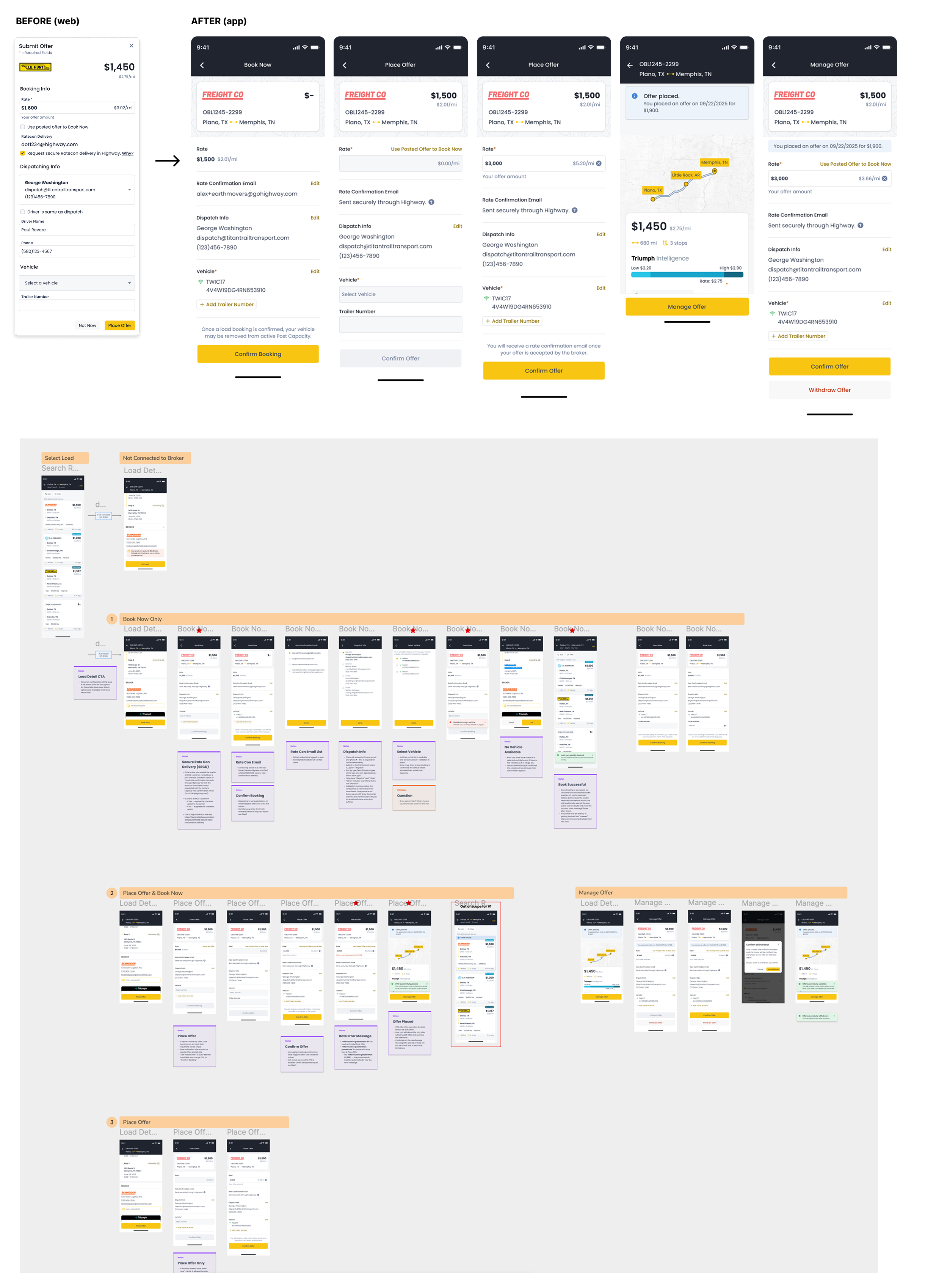
Highway’s app supports instant “Book Now,” a custom “Place Offer,” or both, so the carrier can connect with a broker, place a bid with a tap, negotiate a rate, and see which loads they already bid on. The broker can accept the bid, and the rate confirmation email is securely sent via Highway with all the load details. The flow also handles not-yet-connected brokers and blocks duplicate active offers.
While sorting out variations of this screen, I also unified the interaction on this page: instead of having a combination of input field, dropdown, and checkboxes, I opted for a “static info display” view with an “edit” button that takes you into a selection screen. This reduces the cognitive load and makes information easier to understand.
Earning Trust Before the First Load
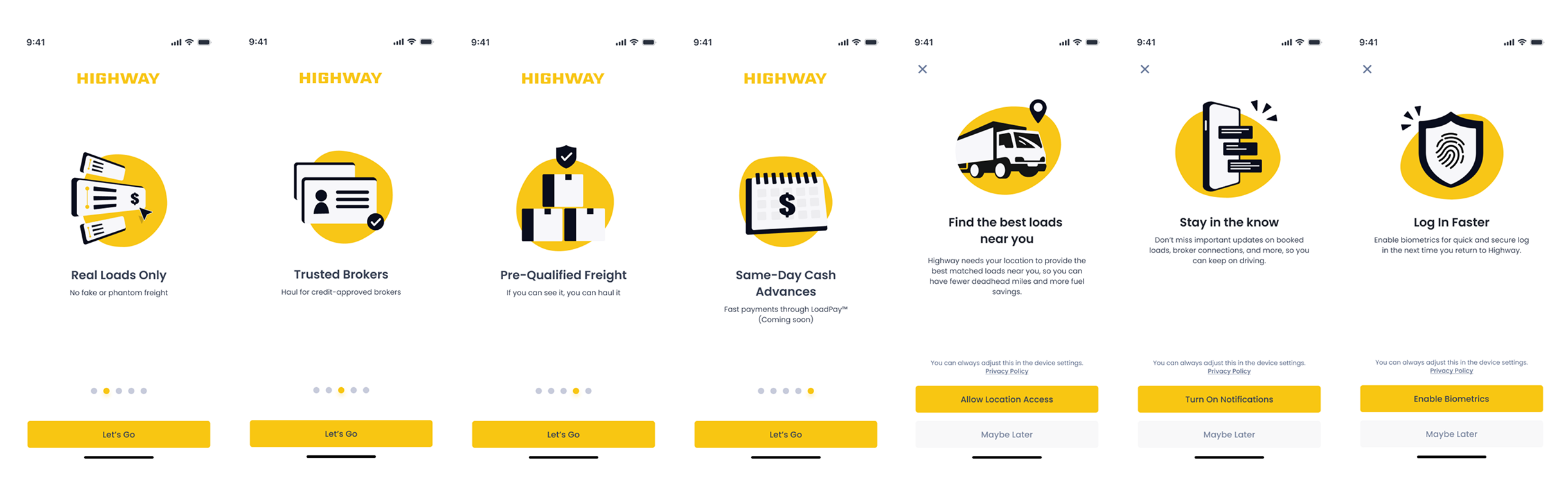
The web app is form- and text-heavy by necessity, serving up a lot of information to the carriers to help them make quick decisions on bidding loads. To introduce brand voice back into the fold, I hand-crafted spot illustrations using Highway’s primary brand colors for the onboarding flow and the permissions screens. Craft in this moment signals quality, and quality earns confidence — a carrier is deciding whether to trust the app with their livelihood.
Custom animations were built to resonate with the carriers on the road. The splash screen with truck headlights coming on softly in the dark, and the loading spinner with the badge catching a glimmer off the truck’s hardware, both hint at the feeling of freedom: an open road, and being an independent owner of a trucking business.
Outcome
Mimicking the client’s startup mentality of build fast, iterate frequently, and push boundaries, our team completed the initial agreed-upon 6 core features, and pulled in 2 more MVP flows before the engagement ends, including phone-based driver tracking that’s highly valuable to brokers. We handed off final designs and code to an app developer we helped recruit, enabling the client to continue to build out the app.
Our primary stakeholder shared direct feedback on the engagement.
“While it’s too early to form a concrete assessment, overall performance seems to be in line with expectations. A standout is the thoughtfulness and capability demonstrated in design -- Jennifer Huang has shown a high degree of expertise in her work. We’re fortunate to have her on the project.”